What a ready meal should be
There is a gap between a restaurant meal and instant noodles that most convenience food fails to fill. The industrial answer is a sealed plastic tray engineered for a microwave, which trades every bit of texture for speed. The answer here is different: dishes that were cooked properly, chilled, and left for you to finish with heat.
That means they take twenty to forty minutes in an oven rather than four in a microwave, and it means the result is closer to something you would serve to guests. It is a fair trade on a Tuesday, and a very good one on a Friday.
It also means these are not shelf-stable. Everything in this category is chilled or frozen and has a real date on it. Treat it like food you cooked yourself and left in the fridge, because that is what it is.
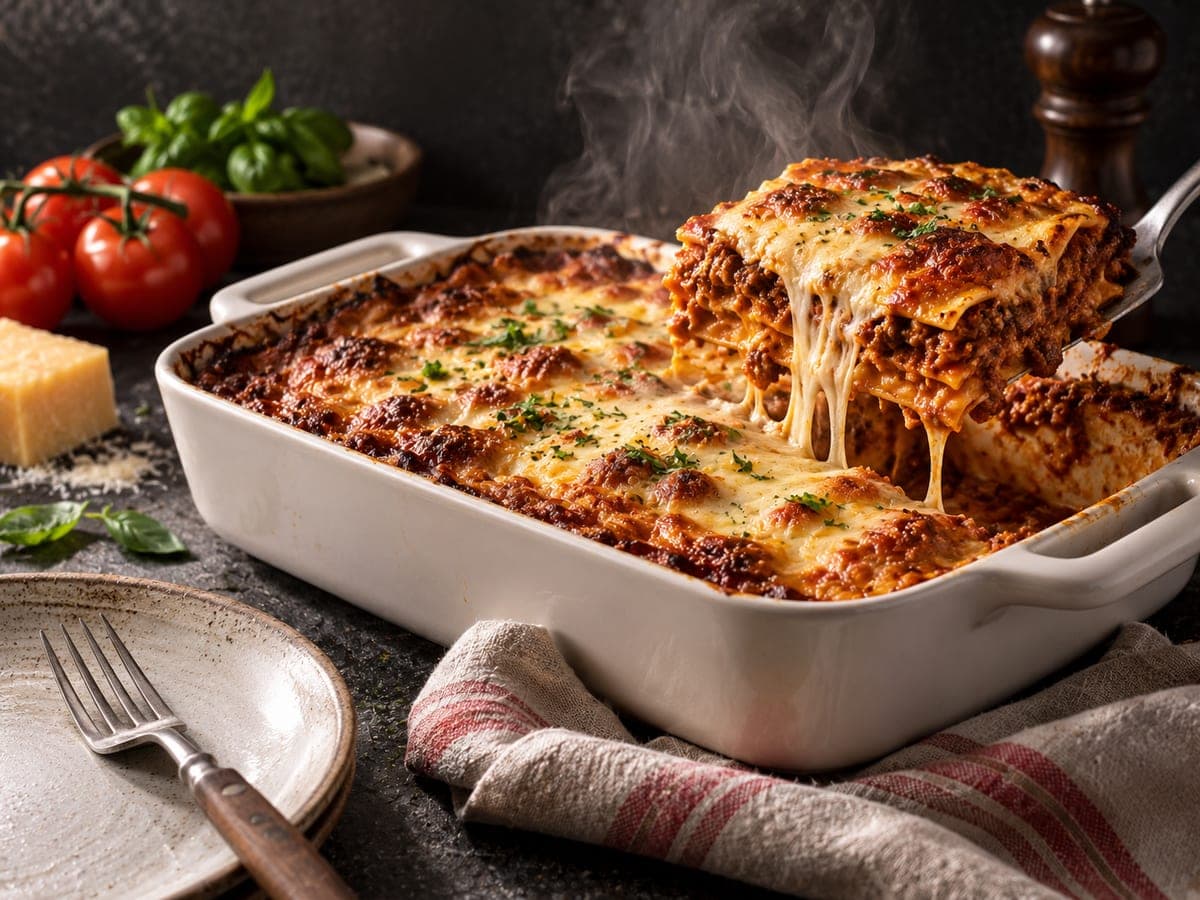
The trays: lasagna, stew, chili, shepherd's pie
The expat meals come in two tray sizes — 3x8 inches, which feeds two, and 8x10, which feeds four to six. Lasagna, beef stew, chili con carne, beef and broccoli, sweet and sour chicken and shepherd's pie make up the range.
Lasagna reheats best covered with foil at 180 °C for twenty-five to thirty minutes from chilled, then uncovered for a final ten to brown the top. Going straight in uncovered dries the edges long before the middle is hot. From frozen, add twenty minutes and keep it covered for most of that time.
The stews — beef stew and chili — are more forgiving and can go on the stovetop instead, which is faster and gives you better control. Low heat, a splash of water or stock, a lid, and stir occasionally. They are both better on the second day, which is true of every stew ever made.
Shepherd's pie wants the opposite treatment to lasagna: uncovered the whole way, at 190 °C, so the potato on top dries and crisps. If the top is not browning, thirty seconds under a hot grill at the end finishes it.
Pies
The savoury pies run through beef and mushroom, beef and onion, beef curry, pulled pork, breakfast, and three variations on beef with cheese and pepper or jalapeño. The sweet ones are apple and chocolate brownie.
A pie lives or dies on its pastry, and pastry is destroyed by steam. Never reheat a pie in a microwave — the filling gets hot, the pastry absorbs the moisture the filling releases, and what was crisp becomes damp cardboard.
Oven, 180 °C, twenty to twenty-five minutes from chilled, on a tray rather than a baking sheet so the base gets direct heat. If the top browns before the middle is hot, cover it loosely with foil and keep going. An air fryer at 160 °C for twelve to fifteen minutes works very well for a single pie.
Pies freeze better than almost anything else here, and they can go into the oven straight from frozen — thirty-five to forty minutes at 170 °C. Keeping two in the freezer is the cheapest insurance against a night when nobody wants to cook.
Pizza
Five to choose from: just cheese, meatlover, salami mushroom, seafood and vegetarian. They come ready to bake rather than pre-baked, which is why they are worth buying — the crust develops in your oven rather than being reheated after developing in ours.
Get the oven as hot as it will go, and give it fifteen minutes longer than you think to preheat properly. Domestic ovens lie about their temperature, and a pizza put into an oven that says 250 °C but is actually at 200 °C will be pale and soft.
If you have a pizza stone or a heavy steel tray, heat it with the oven and slide the pizza directly onto it. The base needs contact with something very hot to set quickly; on a cold tray it steams before it bakes. Eight to twelve minutes is typical.
One topping tip that applies to all of them: if you want to add anything fresh — rocket, basil, more cheese, chilli oil — add it after baking, not before. Anything delicate put on before the oven comes out burnt.
Making a bought meal taste like a cooked one
The gap between a reheated tray and a cooked dinner is almost entirely in the last two minutes, and it is closed with things you already have. Nothing here needs improving — but a plate benefits from contrast, and a tray straight from the oven offers none.
Something fresh and green is the biggest single upgrade: a handful of herbs, sliced spring onion, or simply a salad alongside. Lasagna and shepherd's pie are rich and uniform in texture, and a sharp, acidic leaf beside them does the work that a wine pairing does at a restaurant.
Something acidic is the second. A squeeze of lime over the chili, a spoon of pickled gherkin or jalapeño beside the pie, a splash of vinegar in the stew at the end. Long-cooked dishes lose their high notes in the reheating, and acid puts them back in a way salt cannot.
Something crunchy is the third: toasted breadcrumbs, fried onions, or a piece of bread rubbed with garlic. This is why a pie with mash and peas feels finished and a pie alone feels like lunch at a desk.
And warm the plates. It sounds fussy, and it is the difference between a dish that stays hot through the meal and one that is tepid by the third mouthful — which in a dining room with a ceiling fan running is about ninety seconds.
Storage, portions and planning
Chilled trays and pies keep three to four days in the fridge. Frozen, the trays are good for three months and the pies for four. Label anything you freeze with the date; every freezer eventually becomes an archaeological dig.
Once a tray has been reheated, eat it or refrigerate it within two hours, and do not reheat a second time. This is the ordinary rule for cooked food and it matters more in this climate than in a cooler one.
For portions: the small tray feeds two adults as a main, or three with bread and salad. The large tray feeds four to six. One pie per person is a lunch; two is a meal. A pizza feeds one hungry adult or two alongside something else.
A note on availability worth being straight about: the supplier behind the expat meal trays is changing, so this part of the range may thin out or shift over the coming weeks. The list on this page reads live from the till, so it always shows what is actually in the chiller rather than what we would like to be. Message us if you are planning around a particular dish.