Why 50g sachets instead of big jars
Ground spices do not spoil, but they fade — and they fade far faster than most people think. The volatile oils that carry aroma evaporate steadily once a spice is ground, and heat and humidity accelerate it. In a Panglao kitchen a jar of ground cumin is noticeably weaker at six months and largely pointless at eighteen.
That is the argument for the sachet format. A 50g pack of a spice you use occasionally is three to six months of cooking, which is roughly the window in which it is still worth using. A 200g jar of the same spice is two years, and the last eighteen months of it are dust.
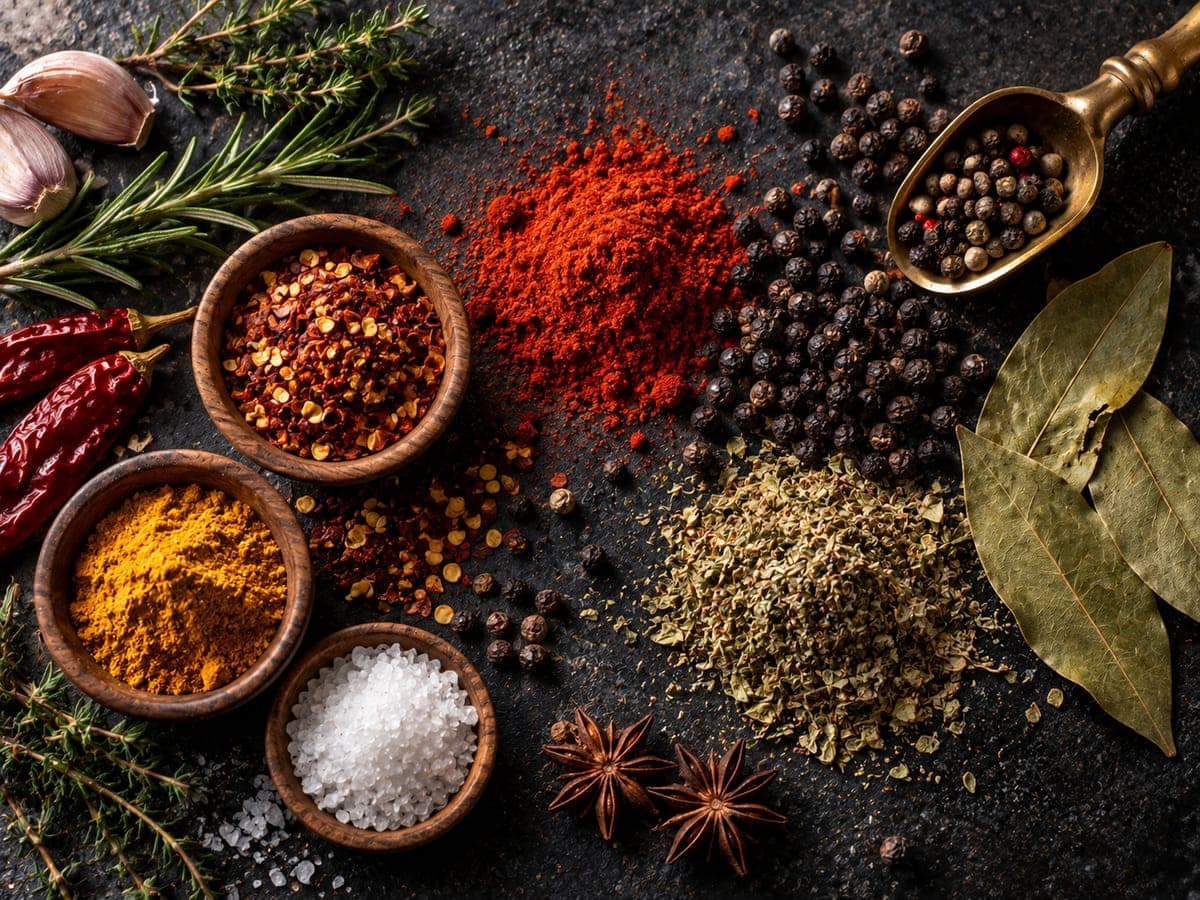
The exception is whole spices — our cloves, star anise, cinnamon sticks, cardamom and bay leaves — which hold their oils inside the intact seed or bark and keep for two to three years. If there is a spice you use rarely, buy it whole and grind it when you need it. The difference between freshly ground and six-month-old pepper is not subtle; it is the single biggest upgrade available in most kitchens for under a hundred pesos.
The spices worth having if you only buy ten
Black pepper, whole rather than ground. Sea salt or Himalayan. Garlic powder, which is not a substitute for garlic but is a different, useful thing — it disperses evenly through a rub in a way fresh garlic cannot. Smoked paprika, which adds depth to almost any braise and is the reason a dish tastes like it took longer than it did.
Cumin, for anything Mexican, Indian or North African. Dried oregano, which is one of very few herbs genuinely better dried than fresh — the drying concentrates the carvacrol that gives it its character. Chilli flakes for controllable heat. Bay leaves, which do very little on their own and are quietly missed when absent from a stew.
Cinnamon, for both sweet and savoury — it belongs in a beef stew as much as in a cake. And coriander seed, ground, which is the spice most people under-use: warm, citrusy, and the bridge between cumin and everything else.
That list costs under a thousand pesos in 50g sachets and covers the overwhelming majority of recipes in any European, American or Asian cookbook.
The rubs and blends
The Muscat Blends line comes in 100g packs and is the shortcut end of this shelf: steak seasoning, coffee steak rub, beef stew seasoning, pork seasoning, grilled chicken rub, turkey seasoning, fish seasoning, salmon rub, peri-peri and a Texas BBQ blend.
A rub is a blend of salt, sugar, spice and often something acidic or smoky, balanced for a particular protein. There is no mystery in them and you could mix your own, but the blending is the skilled part and a good rub saves buying six sachets to use a teaspoon of each.
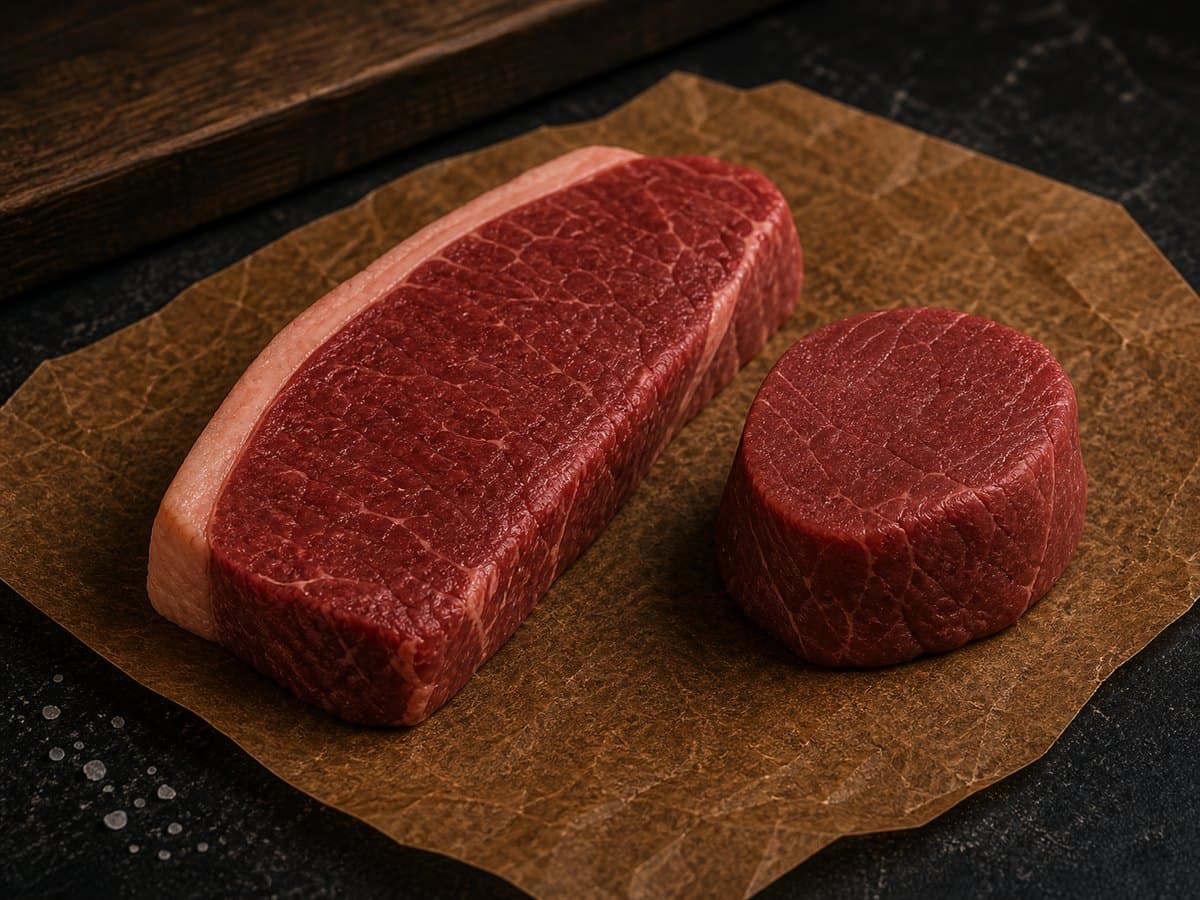
The coffee steak rub is the one to try if you only try one. Ground coffee in a rub does not make the meat taste of coffee — it deepens the crust, adds bitterness that balances the fat, and browns hard. It is very good on the chuck eye.
Apply rubs generously and, if the piece is thick, well ahead — an hour for a steak, overnight for a whole chicken. A rub applied at the moment of cooking seasons only the surface.
Salt, and Asin Tibuok
Five salts on this shelf, and they are not interchangeable. Fine grain iodised sea salt in 600g is the everyday cooking salt and the one to use for pasta water and seasoning as you go. Himalayan pink salt, fine ground in 250g, is chemically almost identical to sea salt despite the marketing — the trace minerals that give it the colour are present in quantities too small to affect nutrition, though the crystal shape does change how it sits on food.
Pangasinan organic rock salt in 500g is the Filipino solar-evaporated salt, coarse and clean, and the practical local choice for cooking in volume.
Asin Tibuok deserves a paragraph of its own, because it is made on Bohol and almost nowhere else. The name means unbroken salt, and it is produced by filtering seawater through the ash of coconut husks soaked in the sea for months, then evaporating the brine in a clay pot over a fire until the pot itself becomes the container — a hollow, dinosaur-egg-shaped shell of salt that has to be cracked and grated. There are only a handful of families left making it. It is smoky, complex, faintly sweet, and it is a finishing salt rather than a cooking one: grate it over a steak or a tomato at the table, never into a pot.
Parsley garlic salt in 110g is the lazy, genuinely useful one — on eggs, on potatoes, on anything roasted.
Storing spices so they last
The four enemies are heat, light, air and moisture, and a tropical kitchen supplies all four generously. The worst place for spices is the most common one: on a rack above the stove, where every pot of boiling water steams them.
Keep them in a closed cupboard away from the stove, in airtight containers rather than the original sachet folded over. Clip-top jars or small screw-top containers are ideal, and decanting also lets you see how much is left and how old it looks.
Never shake a spice directly from its container into a steaming pot. The rising steam condenses inside the container and the moisture will clump the contents and eventually grow mould. Measure into your hand or a spoon first — this is the single most common way home spice collections are ruined.
A rough test for whether a ground spice is still worth using: rub a pinch between your fingers and smell it. If you have to work to detect anything, it is contributing colour and nothing else. Replace it, or use three times as much.
Buying from a seventy-line shelf
Seventy lines is more than any household needs, and the way to use this category is not to browse it but to search it. The list on this page reads live from the till and is searchable — type what your recipe calls for rather than scrolling.
Prices run from ₱55 to ₱195 a sachet, with the whole spices and the saffron at the top end and the powders and starches at the bottom. Nothing here is expensive enough to agonise over; the real cost of a spice shelf is the half of it that goes stale unused.
If you are setting up a kitchen, buy the ten above and add as recipes demand. If you are cooking one specific dish, buy exactly what it needs in the 50g size. And if you take one thing away from this page that you did not come for, make it the Asin Tibuok — it is made half an hour from the shop and there is nothing else like it.