Frozen is not the compromise people assume
Vegetables and fruit begin losing nutrients the moment they are picked. Vitamin C in particular degrades quickly with time, heat and light — a broccoli head that spent a week in transit and two days on a shelf has lost a large share of it before you get home.
Commercially frozen produce is picked at ripeness and blanched and frozen within hours. Study after study has found frozen vegetables matching or beating the fresh equivalent on vitamin content by the time the fresh has reached a domestic kitchen. For anything shipped a long distance to reach an island, frozen wins on nutrition more often than not.
It also wins on waste, which is the argument that tends to convince people faster. A bag of frozen peas is used a handful at a time over a month; a fresh bunch of anything bought optimistically on Saturday is frequently a slimy disappointment by Wednesday.
Where fresh genuinely wins is texture, and specifically in anything eaten raw. Frozen produce is unsuitable for a salad, because freezing ruptures cell walls and the thawed result is soft. Buy the local fresh produce for salads and this freezer for cooking.
Do not thaw the vegetables
This is the single most useful rule in the category, and almost everyone gets it wrong. Frozen vegetables should go into the pan, the pot or the oven frozen. Thawing them first lets the ruptured cells release their water while they sit, and you end up cooking them in a puddle — which steams them grey instead of browning them.
For roasting, spread them frozen on a hot tray with oil, in a single layer, at 220 °C. High heat drives the surface water off fast enough that browning can start. Crowding the tray is what produces sad, soggy roast vegetables, not the fact that they were frozen.
For a stir-fry, add them straight from the bag to a very hot wok and keep everything moving. For soups and stews, in they go frozen, near the end.
The one exception is spinach, which does want thawing and, crucially, squeezing. Frozen spinach holds an astonishing amount of water, and anything you make with it — a filling, a dip, a lasagna layer — will be ruined if you skip that step. Thaw it, then wring it out in a clean cloth until it stops dripping.
The berries
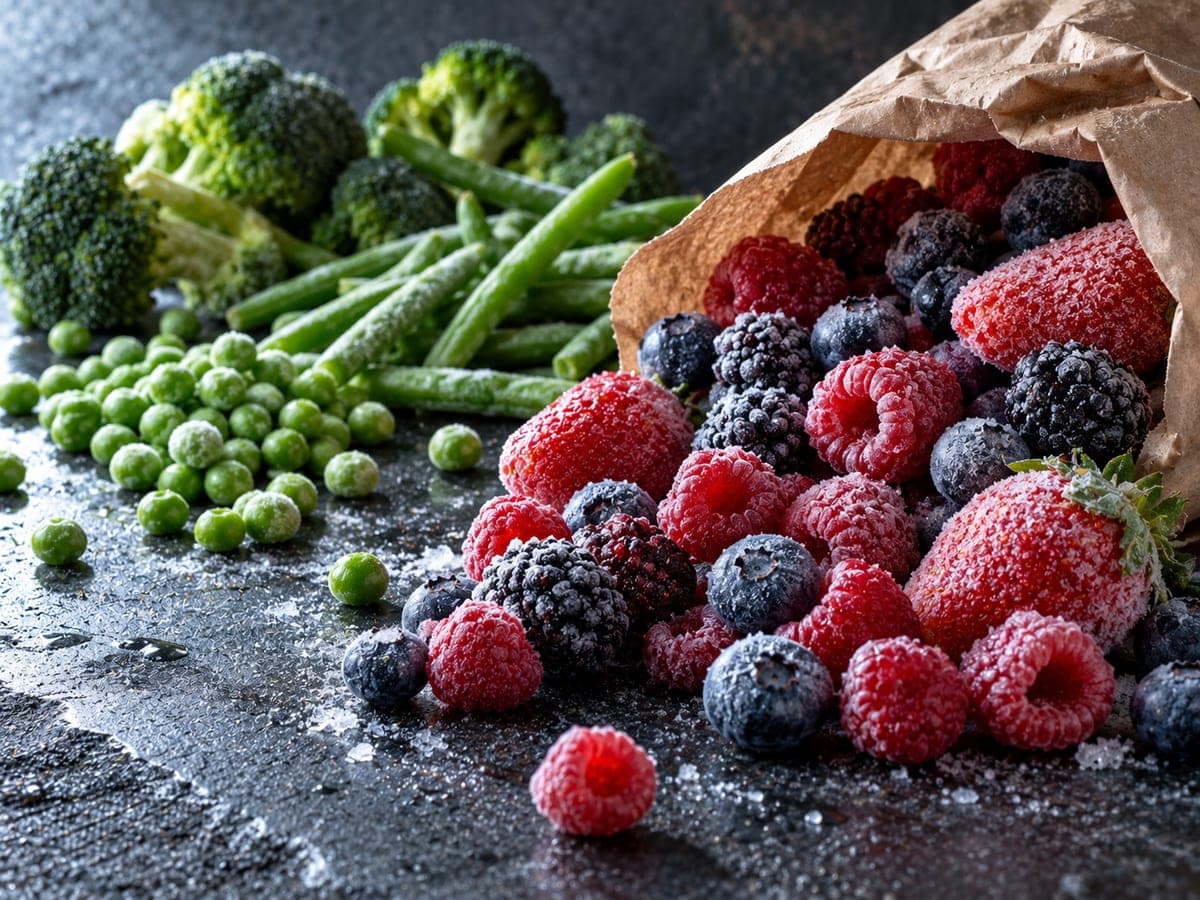
Blueberries come in 250g and 1kg, strawberries in 500g and 1kg, and there are raspberries and a mixed berry bag. These are the things you simply cannot buy fresh here at any sensible price, and they are the reason many people first open this freezer.
For smoothies, use them frozen — they chill the drink without watering it down, which ice does. For baking, also use them frozen and toss them in a spoonful of the recipe's flour first: thawed berries bleed colour through a cake batter and sink to the bottom, and a light flour coating slows both.
For eating as fruit, thaw slowly in the fridge and accept that they will be softer than fresh. Berries take the texture hit harder than most things, because their cell structure is delicate to begin with. A thawed strawberry is a sauce ingredient, not a garnish.
A simple compote is the best use of a bag that has been in the freezer a while: berries, a spoon of sugar, a squeeze of lime, ten minutes in a pan. Over yoghurt or ice cream, that is a dessert made from something you had forgotten you owned.
The vegetables
Broccoli, cauliflower, green peas, edamame, sweet corn kernels, red pepper dices, spinach balls and jumbo green asparagus all come in 1kg packs, alongside two mixes — California mixed vegetables, and corn with carrot and peas.
Champignons come sliced and whole. Mushrooms are the one vegetable that behaves badly frozen if you treat them casually: they hold a lot of water and will steam rather than brown unless the pan is very hot and not crowded. Cook them in two batches rather than one.
Asparagus is the luxury item in this freezer and the one worth roasting rather than boiling. Frozen, hot oven, twelve minutes, lemon and parmesan at the end.
The mixed bags are the practical purchase for a household — a handful into fried rice, a soup, an omelette or a pasta sauce with no chopping and no waste. They are not exciting, and they are the thing people end up buying repeatedly.
Freezer discipline
Keep the freezer at −18 °C or colder and resist the urge to open it repeatedly. Every opening lets warm, humid air in, and in this climate that humidity condenses and becomes the frost that eventually ruins the contents.
Freezer burn — those dry, pale, leathery patches — is dehydration, not spoilage. It is safe to eat and tastes of very little, and it happens fastest in bags that are open or torn. Squeeze the air out before resealing, or move the contents to a box.
Never refreeze produce that has fully thawed. The second freeze produces much larger ice crystals and the result is mush. If a bag has thawed in a power cut, cook it and then freeze the cooked dish instead.
Everything here keeps eight to twelve months properly stored, and the dates on the packs are best-before rather than a safety cliff. The list on this page reads live from the till, so what it shows is what is in the freezer right now.
How much to buy
A 1kg bag of a single vegetable is roughly eight to ten side-dish portions, which for most households is two to three weeks. A 1kg bag of berries is about twenty smoothie portions.
The packs are sized for people who cook regularly rather than occasionally. If you are here for a two-week holiday in a villa, the 250g and 500g formats are the sensible ones; if you live on Panglao, the kilo bags are considerably better value per gram.
Bring a cool bag if you are on a motorbike, or ask us to pack the frozen items together — twenty minutes in this heat is enough to soften the edges of a bag, and softened produce refrozen at home is exactly the mush described above.