Why frozen poultry is the honest choice here
There is a reflex that fresh is always better than frozen, and for poultry in a tropical climate it is often the opposite. A bird frozen within hours of processing and held steadily at −18 °C is, on the day you cook it, closer to its original condition than one that has spent two days in a warm supply chain being called fresh.
What actually damages frozen poultry is the temperature cycling — thawed a little in transit, refrozen at the next stop, thawed again on a market table. Each cycle grows larger ice crystals, each crystal tears more cell wall, and the result is the flabby, watery chicken that gives frozen a bad name. That is a handling failure, not a freezing one.
Our chicken comes frozen from Brazil, which has the scale and the cold chain to do this properly, and it stays frozen until it leaves the shop. If a pack has visible ice crystals inside, heavy frost, or a dry greyish patch, that is freezer burn or a broken chain and you should not accept it. Say so at the counter and we will replace it.
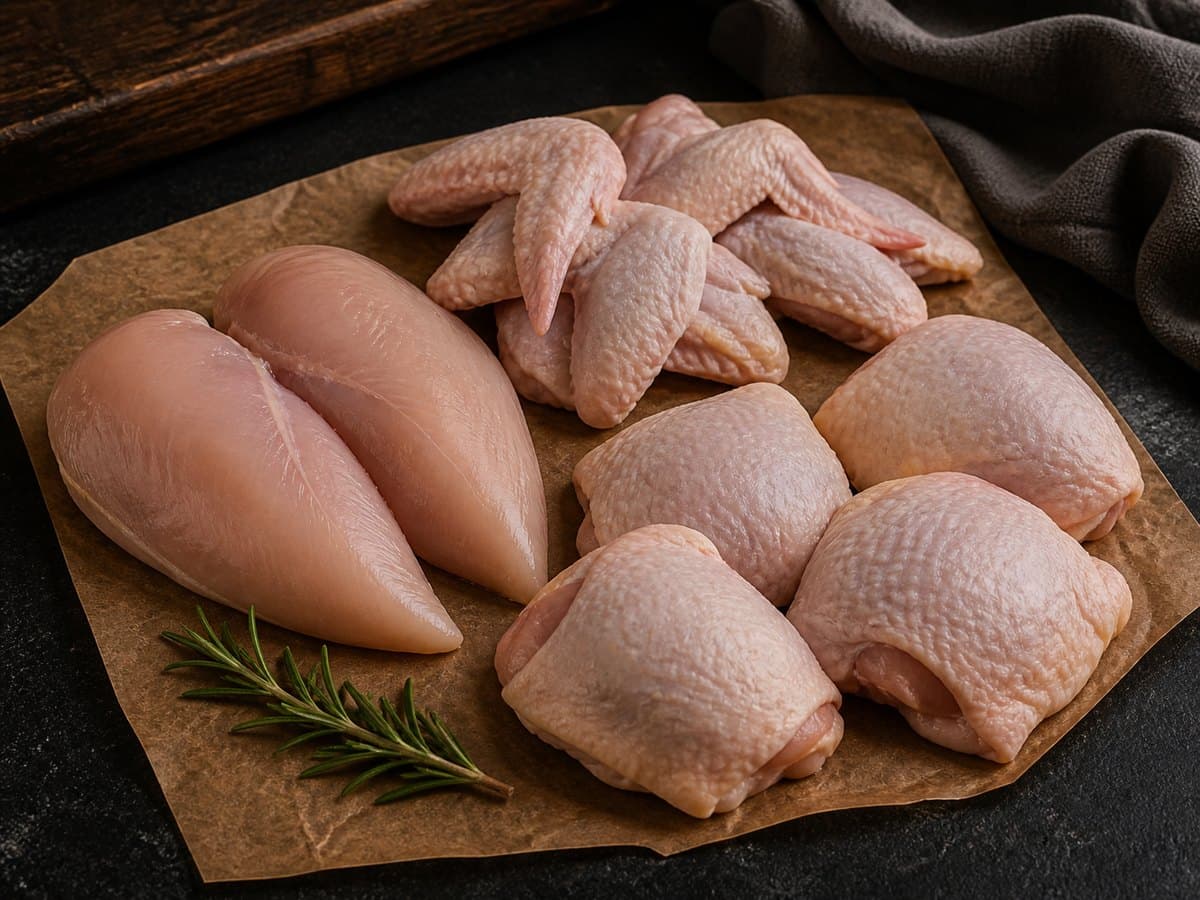
Whole chicken, breast, wings, legs
Whole Brazilian chicken comes in 1.1kg and 1.3kg packs. A 1.1kg bird feeds two generously or three modestly; the 1.3kg stretches to four with sides. Buying whole is the cheapest way to eat chicken and gives you the carcass, which is worth as much as the meat if you make stock — an hour of simmering with an onion and a carrot produces something no carton can match.
Chicken breast comes in 2kg packs at ₱760, which works out at ₱380 a kilo. Breast is the least forgiving part of the bird: it is very lean, and the window between cooked and dry is about four degrees wide. Brine it if you have half an hour — 50g of salt per litre of water, thirty minutes, then dry it — and it becomes markedly more difficult to ruin.
Wings are sold by the kilo and are the best value on the bird if you like them. They have a high skin-to-meat ratio, which is the whole point: cook them hot enough for the skin to render and crisp, 200 °C or above, and they need no batter at all.
Boneless legs and whole chicken legs come in 2kg packs. Thigh meat is darker, fattier and far more forgiving than breast — it is the cut to buy if you are cooking for a crowd, marinating, or making adobo, curry or anything that spends time over heat.
Thawing, which is where most poultry is lost
Thaw in the fridge. A 1.1kg whole chicken takes about a day; a 2kg pack of breast takes a day and a half; a whole turkey takes three to four days and needs planning. Put it on a plate or a tray — thawing birds leak, and that liquid should not be running onto anything else in the fridge.
If you have forgotten, the safe fast method is a sealed bag under cold running water, or in a bowl of cold water changed every thirty minutes. A 1kg pack takes about an hour this way. Never thaw poultry on the counter in this climate: the outside reaches bacterial growth temperature long before the middle has softened.
Do not refreeze raw poultry once thawed. You can, however, freeze it again after cooking, which is a good reason to cook a whole pack and freeze what you do not eat.
Dry the bird thoroughly before it meets heat. Every cook who complains that their chicken skin will not crisp is, nine times out of ten, putting a wet bird in the oven. Paper towels, inside and out, and if you have time, uncovered in the fridge for a few hours first.
Duck, and why it is cooked backwards
Duck breast is the cut that most people cook wrong because they treat it like steak. It is not: it has a thick fat cap that needs time and gentle heat to render, and if you sear it hard the fat stays solid and rubbery under a burnt skin.
Score the fat in a crosshatch, cutting through the fat but not into the meat. Put the breast fat-side down in a cold, dry pan. Turn the heat to medium-low. Over eight to twelve minutes the fat will render out and the skin will go golden and thin — pour off the fat as it accumulates, and keep it, because duck fat is the best roasting medium there is. Only then flip, cook two or three minutes on the meat side, and rest for five. Duck is served pink; cooked through it is liver-ish and tough.
Whole Peking duck comes in 2.5kg packs and is a different project — one worth doing once. The classic method is to separate the skin from the meat with air, scald the skin, glaze it with maltose and dry it in front of a fan overnight before roasting. A simplified home version — dry the bird thoroughly for a day in the fridge, roast at 160 °C for ninety minutes, then blast at 220 °C for fifteen — gets you most of the way for a fraction of the trouble.
Turkey, and cooking for a table
Whole turkey is sold by the kilo and is worth ordering ahead, particularly around Christmas and Thanksgiving when the expat community on Panglao buys most of what we bring in. Count 400 to 500 grams per person on the bone, which sounds like a lot until you account for the carcass.
The two things that make a turkey good are brining and temperature discipline. A wet brine of 60g salt per litre for twelve to twenty-four hours transforms the breast, which otherwise dries out long before the thighs are done. If you have no space for a brining bucket, a dry brine — salt rubbed over and under the skin, uncovered in the fridge overnight — achieves much of the same.
Cook to temperature, not to time: 74 °C in the thickest part of the thigh, away from bone. Most turkey is ruined by cooking to a number of minutes per kilo from a book written for a different oven. Tent the breast with foil for the first two thirds so the thighs can catch up, then uncover to brown.
Rest a whole bird for a minimum of thirty minutes. It will not go cold — a bird that size holds heat for well over an hour — and the difference in the breast meat is dramatic.
Food safety in a hot climate, briefly
Poultry is the one thing in the shop that genuinely requires care. Cook chicken and turkey to 74 °C throughout. Duck breast is the exception and is safely served pink because the risk lives on the surface, which the sear handles.
Keep raw poultry and its packaging away from everything else — a separate board, and wash hands, knives and surfaces immediately after. Do not rinse raw chicken in the sink: it does nothing for safety and aerosolises bacteria over a wider area than it started.
From shop to fridge, keep the drive short or bring a cool bag. Twenty minutes on a motorbike in thirty-degree heat is enough to put a thawing bird into the range where things multiply. We will pack frozen items together and, if you ask, add ice.
Message the counter on WhatsApp before you come — turkey, Peking duck and duck breast move in and out of stock quickly, and we would rather tell you in advance than have you make the drive for nothing.